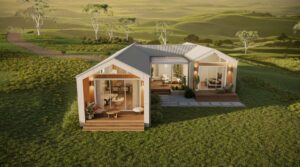
The Best Modular Home Design and Plan Trends Shaping Australia in 2026
2025 is about to end, and we’re looking beyond to stay up to date in the industry because we know that more Australians are moving away from traditional builds and paying closer attention to the emerging trends shaping modular home designs.
This 2026, we’re pushing the boundaries of what’s possible in the modular homes that we build. It’s more than just the aesthetics and overall look. We’re actually exploring deeper into the functionality and practicality of what makes modular homes so special.
From climate-ready façades to open-wide living and luxury acreage layouts, homeowners want spaces that feel modern, resilient, and distinctly their own. We are staying ahead of the curve because we want to control how we design without compromising what our customers’ vision is. By continually refining our plans, materials, layouts, and build process, we help prospective homeowners find the home that not only suits their land, budget, and lifestyle, but also is flexible enough to grow with them and the changing landscape.
So, why are more people choosing modular home builds?
There are a lot of factors, but we could narrow it down to rising construction costs, tight labour markets, and longer build times. That’s why it pushed many prospective homeowners to look for alternatives that feel modern, reliable, and future-proof. That’s where our modular home designs fit into this.
Let’s explore these emerging trends and see how our five most-loved designs fit in.
Contents
- 1 Trend 1: Climate-Resilient Homes
- 2 Trend 2: Scandi Minimalism
- 3
- 4
- 5 Trend 3: Acreage Homes That Feel Boutique
- 6
- 7
- 8
- 9 Trend 4: Barn-Style Homes With a Twist
- 10 Trend 5: Open-Wide Living and Dual-Wing Floor Plans
- 11 Why Modular Homes Are Becoming the Go-To Choice in 2026
- 12 The Future of Modular Home Building
Trend 1: Climate-Resilient Homes
Climate change is real, and we have seen more adverse and extreme weather events in Australia in recent years.
Key Trend Insights
In response, there is a growing design shift with the rise of elevated, climate-resilient modular homes. With flooding becoming more frequent, particularly in the eastern coastal towns and cities, homeowners are no longer treating elevation as a technical box to tick. They’re looking for designs that protect their investment and still feel like a place they’re proud to call home.
Councils in many regions are now tightening elevation requirements, and more buyers are actively seeking homes that can handle higher water levels, stronger winds, and shifting water patterns. What used to be a “flood zone problem” is now a mainstream consideration, even for families who simply want future-proofing built into the foundation of their homes.
But this is where a major design challenge emerges. Elevated homes can often look awkward: too tall, too top-heavy, or visually disconnected from the land. Homeowners want safety without sacrificing style, comfort, or visual appeal.
The Modern Coastal is purposely designed for flood-affected areas by blending resilience and aesthetic harmony, something elevated home designs have struggled to achieve. It meets all required elevation standards while avoiding the flimsy, stilted look people instinctively push back against. Instead, the proportions are balanced, grounded, and undeniably coastal, creating a home that feels stable and confident, not improvised.
Where the trend demands smarter construction for harsher climates, The Modern Coastal shows exactly how modular design can rise to the challenge. It delivers a home that’s ready for the realities of living in flood-prone regions, not by compromising on style, but by strengthening it.
Trend 2: Scandi Minimalism
Another major design movement gaining momentum into 2026 is the shift toward warm minimalism – a softer, more human take on Scandinavian design.
Key Trend Insights
Australians are gravitating toward homes that feel calm, uncluttered, and connected to nature, especially as busy schedules and digital fatigue push people to look for spaces that help them decompress the moment they walk through the door.
This trend isn’t just about clean lines and pale timber. It’s fueled by a growing appetite for biophilic design where layouts and materials boost wellbeing by maximising natural light, airflow, and views.
The Green Building Council of Australia has established the Green Star rating system as a means of certifying building design and construction, operations, fitouts, and communities. Homes with better daylight, ventilation, and visual connection to nature can increase comfort, lower stress, and even improve sleep quality. So it’s no surprise that homeowners are choosing plans that feel bright, breathable, and intuitively organised.
Zoned living also plays a massive part in this shift. With more Australians working from home, raising young families, or simply wanting privacy between living and sleeping areas, the demand for thoughtful, separated layouts is rising. But people don’t want a home that feels segmented or closed off. They want harmony, not compartmentalisation.
This is where our Scandi H-Shape house shines – The Thredb o. Its distinctive H-shaped footprint naturally creates two wings, giving homeowners gentle separation without losing connection. At the heart of the home is a central courtyard, a sun-lit, open zone that draws light deep into the interiors and invites the outdoors in. It’s the kind of space that makes mornings brighter, family time more relaxed, and everyday life feel a touch more effortless.
Every aspect of the design echoes the warm minimalist trend: subtle finishes, airy circulation, a refined palette, and generous glazing that frames the landscape. Instead of chasing trendiness, it helps the residents live a slower, lighter, and more connected life.
Trend 3: Acreage Homes That Feel Boutique
The shift toward regional living and larger blocks continues to strengthen, and it’s reshaping the types of homes people are looking for.
Key Trend Insights
With regional migration rising around 11-12% as of March 2025, acreage properties are no longer a niche dream. They’ve become a mainstream lifestyle choice for families, retirees, and young professionals who want more room, more privacy, and a slower pace without giving up modern comfort.
Luxury home acreage design shouldn’t be focused on the size alone. It should also emphasise architectural quality with homes that feel intentional, beautifully proportioned, and tailored to open landscapes. The old stereotype of a boxy, oversized country home is fading fast. Instead, many buyers are gravitating toward boutique acreage designs that blend luxury with practicality: wide verandahs, generous living areas, seamless indoor–outdoor flow, and layouts that make the most of natural views.
Another driver behind this trend is the growing desire for a “retreat-like” home. With longer working hours and hybrid work still the norm, people want residential spaces that feel rejuvenating mini escape from the hassles of daily life.

Designed specifically for larger blocks, The Alpine captures the acreage lifestyle. Its sweeping verandahs frame the home beautifully while providing functional outdoor living, perfect for summer evenings, social gatherings, or simply watching the sun drop behind the tree line. Inside, its spacious open-plan layout delivers a sense of freedom and airiness that acreage buyers crave, without losing the cosy, boutique feel that makes the home feel personal rather than cavernous.
Every architectural line reinforces the shift toward luxury acreage home design that feels refined, grounded, and built for real life. The flow is intuitive. The proportions feel generous but balanced. And the design embraces its surroundings rather than competing with them, making it a perfect match for those seeking the best parts of regional living.
Trend 4: Barn-Style Homes With a Twist
One of the most distinct architectural trends rolling into next year is the rise of the modern barn-style home.
Key Trend Insights
What began as a rural aesthetic has evolved into a mainstream desire for homes that feel warm, sculptural, and instantly recognisable. Australians are maybe drawn to the soaring gable roof, clean silhouette, and natural materials, but they’re also looking for a more contemporary and refined version suited to the local climate and lifestyle.
Internationally, barn-style homes have surged across the US, Scandinavia, and parts of Europe, but the Australian interpretation has developed its own identity. Here, homeowners want the charm of the barn form without the heavy rustic feel. That means lighter façades, minimalist detailing, generous glazing, and interiors that prioritise comfort, energy efficiency, and seamless indoor–outdoor living.
Part of the appeal comes from the emotional side of the architecture. Barn homes feel grounded, safe, and timeless, which is a comforting contrast to the complexity of modern life. At the same time, their bold rooflines and sculptural profiles make them feel architectural and memorable, appealing to buyers who want something with character and street presence.

The Charlotte takes the iconic gable silhouette that defines barn architecture and elevates it with a distinctly Aussie sensibility. Rather than leaning into heavy timber or rustic farmhouse cues, The Charlotte uses clean lines, modern materials, and an open, expansive layout that feels both relaxed and sophisticated.
This modern barn house has soaring ceilings that create a sense of volume and breathability that families immediately respond to. Natural light pours in through large windows, making every room feel brighter and more inviting. The layout is thoughtfully resolved, giving owners the airy openness they want without compromising on privacy or functional zoning.
Energy efficiency is the biggest driver behind the barn-house revival. It is baked into the design with proportions, window placements, and material options carefully incorporated to help regulate temperature naturally. The Charlotte delivers a barn-style home that feels grounded in tradition while entirely suited to contemporary living. It hits the sweet spot between visual drama and everyday comfort, making it a favourite among families, downsizers, and acreage owners alike.
Trend 5: Open-Wide Living and Dual-Wing Floor Plans
As Australian households become more diverse and more dynamic, many are looking for flexible floor plans that can adapt as life evolves.
Key Trend Insights
This shift has pushed dual-wing floor plans into the spotlight. These designs separate sleeping zones from living and social areas, giving each part of the home its own sense of purpose. For households with different schedules, this kind of zoning directly improves day-to-day comfort.
Another factor driving the trend is the desire for open-wide living, where the heart of the home feels expansive, connected, and uncluttered. Many homeowners want a central hub that blends kitchen, dining, and living into one cohesive space, creating better flow for entertaining, family time, and everyday movement. With more people spending time at home than ever, a generous open-living core has shifted from a nice addition to an essential part of modern design.

The Buller shines as its two-wing layout naturally creates privacy between the bedroom zone and the main living spaces, making it ideal for families who need separation without the feeling of separation. The layout also supports flexible lifestyles with each side of the home evolving with the household.
Spacious, light-filled, and designed for connection, the central open-plan living area acts as the anchor of the home. Large windows and smart orientation options allow light to spill through the space, reinforcing the trend toward brighter, more breathable interiors. It’s the kind of central hub that makes daily life feel effortless and social moments feel natural.
Because many homeowners now prioritise customisable modular home design, its structural clarity lends itself perfectly to personalisation. Whether it’s minor layout tweaks, façade differences, or interior configuration, the two-wing structure offers a clean, adaptable foundation that suits growing families, downsizers seeking privacy, or multigenerational households needing distinct zones.
Why Modular Homes Are Becoming the Go-To Choice in 2026
Several factors are shaping the growing preference for modular home design by prospective homeowners in 2026 and beyond.
1. Rising construction costs are reshaping buyer decisions
Over the past three years, there have been steep increases in building costs on record. Residential construction costs have risen more than 2.1% in the last 12 months, driven by material shortages, labour delays, and supply chain disruptions. For many families, this has made conventional building feel unpredictable, both in budget and timeline.
Modular building flips that equation. Because the majority of work happens in a controlled factory environment, pricing remains stable, timelines stay firm, and delays are significantly reduced. Homeowners know what they’re paying for and when it will be finished.
2. Faster build times are now a top priority
With traditional builds often stretching well past 12.7 months, many Australians no longer want (or can afford) to wait that long. Modular construction, on the other hand, can deliver a finished home in as little as 12 to 16 weeks once onsite work begins, thanks to parallel manufacturing and installation processes. For buyers relocating, renting during construction, or juggling life transitions, shaving months off the build time is financially life-changing.
3. Quality control is significantly better
Weather delays, uneven workmanship, and site unpredictability are major concerns for homeowners. Modular construction avoids these by building in a climate-controlled facility, where every stage is overseen by specialist teams and checked against strict manufacturing standards. Instead of hoping for consistent trades across an open worksite, homeowners get factory-level precision in every wall, joint, and finish produced under the same conditions.
4. Sustainability is no longer optional
Australians are making more environmentally conscious decisions, and this carries through to how they choose to build. Modular construction is now more efficient than ever before. Factory-based modular home construction can reduce waste as compared to traditional construction, thanks to exact material calculations, recycling programs, and reduced onsite disturbances.
5. Customisable and lifestyle-focused designs
Gone are the days when modular homes were limited or “cookie-cutter.” In 2026, modular design rivals (and often surpasses) traditional architecture in style, cost, and floor plan flexibility. Manor Homes has a wide range of modular home designs that reflect exactly what modern buyers want. Greater customisation options allow homeowners to personalise layouts, façades, materials, and interior styling without adding complexity or risk.
The Future of Modular Home Building
If there’s one message that rings loud and clear heading into 2026, it’s this: Australians want homes that make life easier, not harder. Homes that feel intentional, resilient, and beautifully designed from the ground up. Modular homes answer that call by elevating the entire building experience with smarter design, faster timelines, and quality you can rely on.
Our designs show exactly what modern homeowners are searching for: style with substance, architecture with purpose, and a building journey that actually feels enjoyable.
As the industry continues to evolve, Manor Homes remains ahead of the curve so you can future-proof your home. Whether you’re upsizing, downsizing, or finally building the home you’ve been sketching in your mind for years, there’s a modular design ready to bring that vision to life.